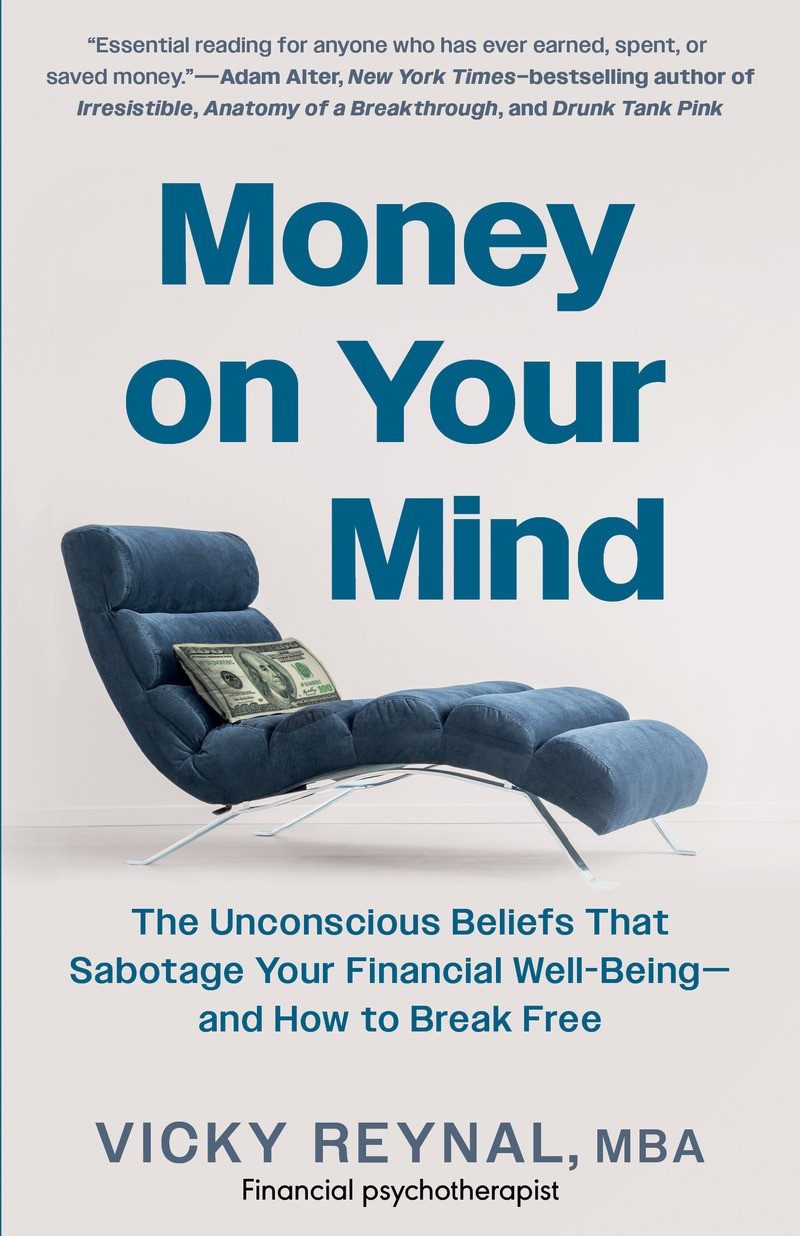

Why do some people save every penny while others spend compulsively? Financial psychotherapist Vicky Reynal reveals how early experiences shape our money habits – and how we can rewrite them as adults.
Some people save obsessively, others spend with ease. How early is our relationship with money formed?
Much earlier than most people think. Our sense of deservingness, our attachment patterns and our ability to regulate emotions develop in childhood – and later show up in our financial behaviour. If someone struggles to regulate their feelings, they often struggle to regulate their spending too, swinging between extreme frugality and compulsive spending.
So are money habits less about numbers and more about emotions?
For many of my clients, yes. Money is often misused to express unconscious feelings. Some people deny themselves the good things that money can buy because they don’t feel deserving, or they are afraid of their own greed. Others spend impulsively to soothe anxiety, loneliness or boredom. The behaviour may seem irrational, but emotionally it often makes perfect sense.

What kinds of “financial traumas” exist?
There are obvious ones. If your family has gone through a bankruptcy, for instance, that will probably shape your anxieties about money or your fear of repeating your parents’ mistakes. But I find the non-financial experiences even more interesting, because they tend to have an even deeper impact.
For example?
Experiences of abandonment early in life. Or being bullied at school. Attachment patterns play a huge role. Someone with an anxious attachment style may use money to keep people close – for example, by being excessively generous with friends or partners. Gift-giving becomes a way of securing love and reassurance. For others, unresolved attachment issues may lead to chronic overspending.
Can you give an example from your consulting room?
I once worked with a man in his twenties who initially came to me with what looked like an overspending problem. He was still living at home. When we explored it more deeply, it became clear that his spending was driven by a fear of separation. The fear of leaving the family home, becoming independent and potentially losing emotional closeness with his parents.
How do these early experiences influence the way we handle money?
The behaviour can range from relatively ordinary to highly destructive. Some people develop unsustainable shopping habits; others gamble, keep financial secrets, steal from their employers or drain their life savings engaging in “findom” – short for financial domination, a sexual kink in which pleasure is derived from giving money without receiving anything tangible in return.

Another consequence you describe in your book Money on Your Mind is what you call “financial anorexia”. What does that look like?
It’s an extreme restriction around spending. I once worked with a man who earned very well but didn’t even own a winter coat and was almost proud of enduring the cold. He had grown up with a mother who constantly deprived herself and learned early on that there was virtue in self-denial.
What’s behind that kind of extreme restraint?
It’s often driven by a mix of control and fear – fear of greed, fear of losing control and fear of burdening others with one’s needs. Psychologically, it’s very similar to anorexia: restraint becomes a source of self-worth.
The opposite is emotional overspending or so-called “retail therapy”. Why does it work, at least temporarily?
Because shopping triggers a dopamine release. The relief, however, is short-lived. Over time, people need to spend more, and more quickly, to get the same emotional hit. Sometimes people also buy things hoping to transform themselves. One client of mine was addicted to designer handbags. As a child, she had been abandoned by one parent and emotionally neglected by the other. “Things stay,” she told me. “People leave.” The bags became a substitute for emotional security.
These patterns are often followed by intense shame and guilt. Why is money so loaded with both?
Because most of us were never taught how to deal with money properly. We constantly compare ourselves and assume others are doing better. Money is deeply tied to self-worth, which makes it incredibly hard to talk about it openly.
And why do people sometimes sabotage themselves financially?
Often because they don’t feel deserving or they fear making demands. I’ve worked with people who do excellent work but cannot bring themselves to send invoices. Past humiliation or criticism still silences them.
Are there differences between men and women when it comes to harmful money behaviour?
Patterns exist, but they’re social rather than biological. Many women feel less confident about money, even when they earn as much as their partners. Often because they never saw their mothers manage finances while growing up.
You also write about money secrets. Why do people hide their financial behaviour?
Money secrets are far more common than most people realise. Surveys suggest that around two in five people have kept some kind of financial secret from a partner – often hidden debt, concealed purchases or quietly discarding bills before entering the house.
What drives that secrecy?
Usually, it’s the fear of judgment. But it can be more complex. Some use secrecy as a passive-aggressive response to emotional disappointment. Others keep financial secrets as a protective boundary when intimacy feels unsafe.
Who comes to see you – only rich people?
Not at all. I work with people across the spectrum, from ultra-high-net-worth individuals to clients with less than a thousand pounds in their account. Money distress is not correlated with how much money you have.
Many people struggle daily with the cost of living. Some may see your clients’ problems as luxury issues.
I understand that perspective, but these are not luxury problems. I see people in real distress. Some feel suicidal because they cannot enjoy their lives. Others are stuck in relationships where they give endlessly and receive nothing in return. Many have already tried coaching, books or financial advice – they know what to do, but emotionally, they can’t act. For them, therapy is often a last resort.
What does it take to rebuild a healthy relationship with money?
It starts with curiosity: Why do I act this way? Where did these patterns come from? We need to understand the experiences, feelings and desires behind our money behaviour. Change takes time, but awareness creates choice – and with choice comes greater self-determination.
Finally: can money make us happy?
Money can provide comfort and experiences, but it can’t resolve inner conflict. Beyond meeting basic needs, its power is often overestimated. True happiness comes from relationships, purpose and a sense of agency over our own lives.

Vicky Reynal
Vicky Reynal is the author of the award-winning book Money on Your Mind: The Psychology Behind Your Financial Habits (Bonnier Zaffre, 2024) and writes a weekly column as a “Money Psychotherapist” in The Times and Sunday Times. She runs a psychotherapy practice in London and holds degrees in psychology, psychotherapy and an MBA from London Business School, bringing a unique perspective on the psychology of personal finance.