
Paradoxically, more and more young people are worried about their financial future and even fear poverty in old age. Nevertheless, only very few are actually making provisions. Why is that? And what would have to change for worries to become pension provision? Youth researcher Simon Schnetzer provides some answers.
Young people nowadays are more likely to fear poverty in old age. Are we currently experiencing a turning point in the history of modern retirement provisions?
For young people in Europe, poverty in old age was long considered unimaginable. Previous generations were able to rely on the security promises of their governments – just think of the famous slogan of the German Federal Government in 1986: “Because one thing is certain: your pension.” Today, however, this confidence is dwindling. More and more young people believe they will not have adequate financial security in old age and will therefore have to make their own provisions to a large extent. This is reflected in our trend study “Youth in Germany 2025,” but also in international surveys.
You have been researching young generations for over a decade. What has changed?
Optimism about the future and a sense of security have waned significantly – as have financial confidence and confidence in pension systems. This is due to the experience of various crises: financial crisis, refugee crisis, climate crisis. The final tipping point was the Covid-19 pandemic.
Suddenly, money worries were no longer just an issue for low-income households but spread to the middle class. As soon as this crisis was over, price increases and inflation followed as a result of the war of aggression in Ukraine. This series of successive crises has permanently shaken people’s sense of security, especially amongst young people.
How does this attitude towards life affect young people’s handling of money and pension provision?
Money has become massively more important as a guarantee of security and prospects for the future. As a result, when choosing a job, income is often more important than the desire for self-fulfilment.
Paradoxically, this need for security is not reflected in retirement provisions – on the contrary: fewer and fewer young people are saving in a targeted manner for old age.
So despite their better knowledge, why are young people not making provisions more consistently?
There are many reasons. The main reason cited is a lack of financial flexibility – many people simply cannot afford provisions. At the same time, there is a strong fixation with the present: immediate needs take precedence, the propensity to consume has increased, while the willingness to forego has fallen. Then there is also a feeling of being overwhelmed: retirement provisions are perceived as complex, confusing and difficult to access.
What is the reason for this overload?
There is a lack of knowledge. The subject is often not systematically discussed at home or at school. Our research shows: the motivation to set aside money is low if there is no clear plan and it is unclear which steps would be sensible and effective. This reluctance is exacerbated by the frustrating feeling that even consistent saving may not be enough to lead a financially carefree life in old age.
The retirement of the baby boomers is exacerbating the crisis in pay-as-you-go pension systems. Is there a threat of a Gen Z revolt?
Isolated voices – from young politicians, for example – address this imbalance. However, a broad protest movement is not discernible. On the contrary: most young people are opposed to reforms that would burden older generations, such as raising the retirement age or lowering the pension level.
What is striking is that in the political struggle for distribution, the young generation is the only one that has so far barely resisted long-term disadvantages.
How do you explain this solidarity?
Our study shows that the family is central to young people, which is why they generally treat older generations with loyalty. However, I would rather speak of a naïve form of solidarity. It is based on a lack of information and on the fact that redistribution mechanisms are abstract and their consequences are a long way off. This makes it all the clearer: financial and pension literacy are more important now than ever.
What would help specifically?
A school subject in finance would be an important step. There is also a need for greater social awareness and greater appreciation of private retirement provisions, for example through targeted tax incentives such as those used in France. And finally, we also need a new language.
Why do we need a new language?
There is hardly any term as unattractive to young people as “retirement provision”. Instead, we should talk about prosperity building or investing in the future. Language shapes perceptions and decisively determines whether young people even address an issue. It would also be found much more often in young people’s digital searches.
What do you think of the early start pension model*?
I find the concept of a state early start pension currently being discussed in Germany an exciting approach. The idea of setting up a small share portfolio with funds or ETFs for each child at an early stage makes optimal use of the compounding effect. At the same time, it would introduce young people to fully-funded pension provision at an early stage – especially those who do not have access to it from their parents’ home. It would make it much easier to get started with long-term asset accumulation and retirement provisions.
One thing is clear: without reforms, Gen Z will have no choice but to take responsibility for closing the resulting pension gaps through private provision measures. Are there any signs that young people are prepared to take on this responsibility?
Gen Z is indeed increasingly investing in equities, ETFs and cryptocurrencies – often via apps and neobrokers. This entails risks but also offers opportunities, especially with broadly diversified, passive investment strategies. Realistically however, the general public will not be able to secure their retirement provisions through smart investments alone. Politicians remain clearly challenged here if the intergenerational pension system is to remain sustainable.
Some say the problems will go away once the number of pensioners falls again after the babyboomer generation. Are the worries of young people unfounded?
A shaky thesis. There are too many unknown variables – think, for example, of the impact of artificial intelligence on the labour market or the volatile developments in emigration, intra-EU mobility and migration. So I think putting your hands on your lap and hoping for an automatic easing is risky.
I am convinced that with a clear pension plan – or perhaps we should call it a prosperity plan – young people can actively shape their financial future and navigate an uncertain world with greater security.
*The Frühstart-Rente (early start pension) is a state-sponsored model of retirement provision for children and young people that exists in a number of countries, including Japan and Canada. In Germany, it is part of the planned pension reform. As of 2026, the state will pay 10 euros a month for each child into an individual, fully-funded custody account.
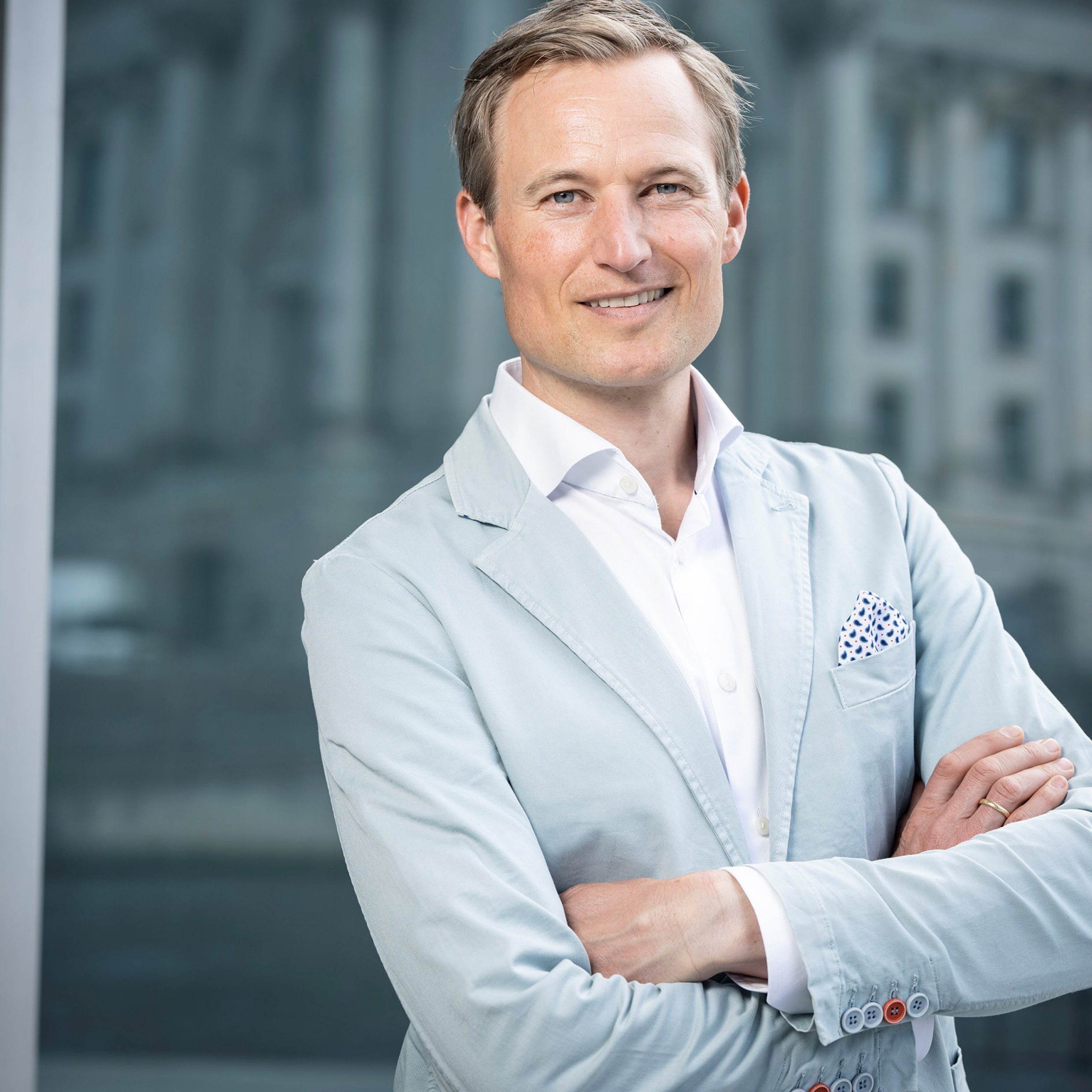
© Portrait photo: Marco Urban

Simon Schnetzer
Simon Schnetzer holds a degree in economics and is one of Germany’s most renowned youth researchers. Together with Klaus Hurrelmann and Kilian Hampel, he publishes the annual trend study “Youth in Germany”.