
Even though the stock markets are booming, the global situation is currently volatile. It’s one headline after another. What should private investors do? Behavioural economist Thorsten Hens explains how fear and euphoria influence investment decisions. He reveals what the biggest investment mistake is – and why artificial intelligence also has blind spots.
Mr Hens, the world is currently full of geopolitical tensions and uncertainties, while at the same time stock markets are performing well. How does this fit together?
The media naturally reports on sensational events, whether geopolitical risks, wars or artificial intelligence. Stock markets, on the other hand, focus more on economic trends. And things are still looking good: the order situation is encouraging, profits are rising and interest rates are comparatively low.
Do we overestimate the connection between the state of the world and the stock market?
We are strongly influenced by what gets our attention. We are more aware of out-of-the-ordinary reports rather than everyday news. This can affect our perception.
What is more dangerous for investors: fear or euphoria?
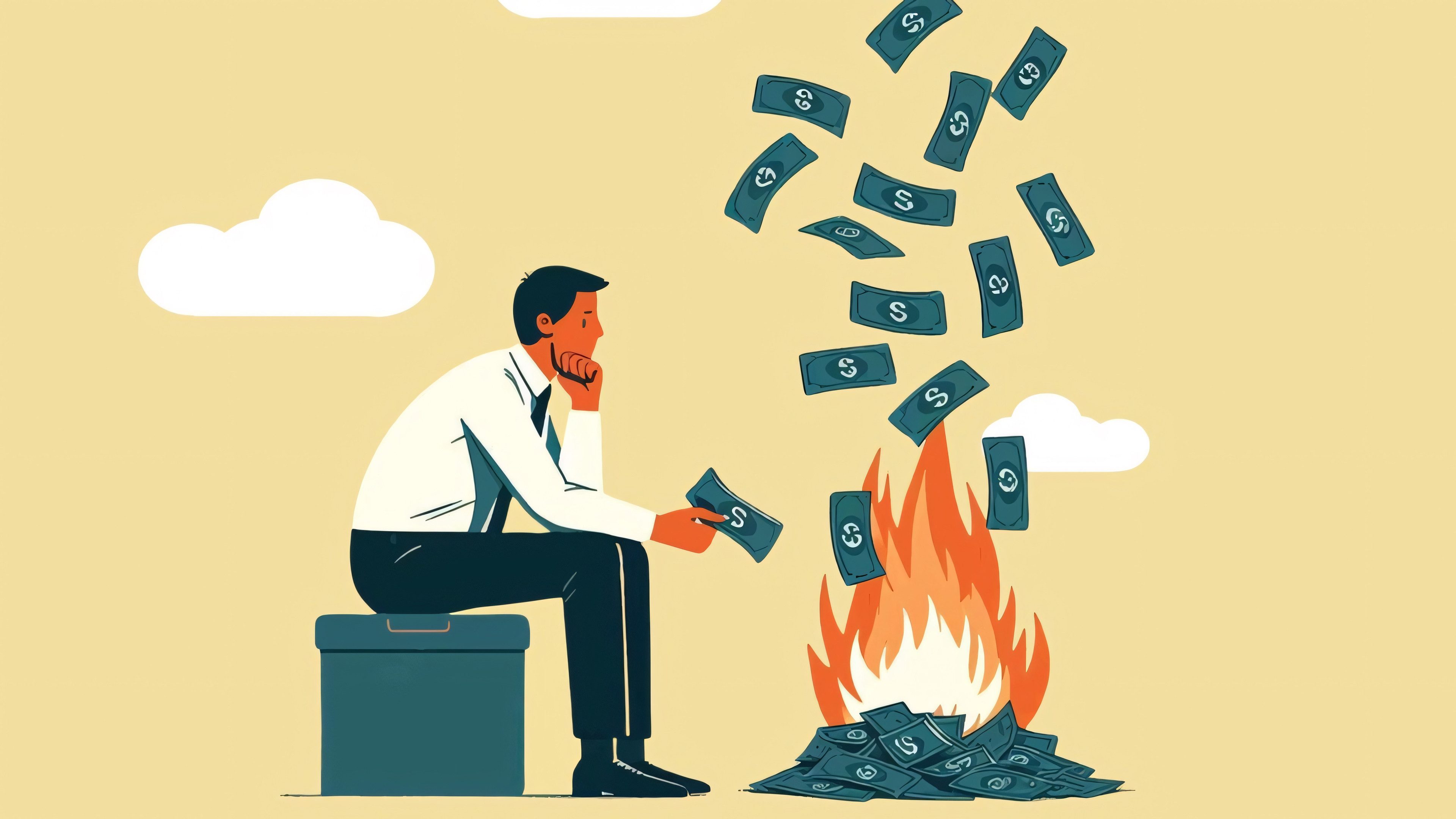
Neither are good. You take too much risk when you’re euphoric, but fear can be particularly expensive: if prices collapse, you will incur large losses if you exit at the wrong time.

What happens to us when we are fearful?
We become short-sighted. Instead of looking five or ten years ahead, we suddenly check our investments on a daily basis and react to every fluctuation. Such stress reactions can even be measured by a person’s brain activity and hormones. From an evolutionary point of view, panic makes sense. If there is danger, we have to react quickly. This reaction is less helpful on the stock market.
How can you deal with this?
Experience helps. Anyone who has already gone through several crises will remain more calm. Simple rules of thumb also work. For example, you can set your equity exposure in advance. If a share price rises sharply, you can then sell some of them. If they fall, you can buy shares afterwards. This way, decisions are not only made when your emotions are at their highest.
What is the biggest mistake investors can make?
From my point of view, this is quite clear: not investing! Owning shares allows you to participate in economic progress. It is important to be diversified and have an investment horizon of at least about ten years.
What role does age play in this? Does a 30-year-old have to invest differently from a 60-year-old?
Age alone is not the decisive factor. I’m 64, but I still have a long investment horizon because I want pass on my assets to my children and allow them to continue investing. The key factor is when the money is needed.
But does your recommendation to invest your money still hold true today? Given the stock market highs, many people are asking whether they are too late?
Stock market peaks are normal. If the economy grows over the long term, new peaks are inevitably going to be seen again and again. So high prices on their own are no reason to not invest.

And if the AI bubble soon bursts, which many people are warning will happen?
Maybe it will indeed burst. But perhaps prices will continue to rise for a long time to come. No one can predict what will happen. People who wait for the “perfect” moment run the risk of not investing their money for years.
So if you inherit CHF 100 000, you should invest this money immediately?
Exactly. But I would stagger my investments, for example, invest CHF 10 000 a month over ten months. This minimises the risk that the entire amount will be impacted in the event of a market crash. But I wouldn’t wait much longer, otherwise you will miss out on potential returns.
Assuming prices will fall, when should I buy more shares?
If there is a drop of 5 or 10%, the probability is about 50:50 that it will pick up again after that. However, if prices fall 20%, the probability of a subsequent upturn is around two thirds according to our calculations. This can be a good time to start investing.
But how do I know it won’t go down another 20%?
You can never know that. It’s not about waiting for prices to bottom out. The key is to rebuild your investments in equities. If your investment has fallen below your target amount due to the slump, buy more. If prices go up a lot, you then do the opposite and sell some of them. This is counter-cyclical investing.
Does an equity portfolio need a contingency fund?
Yes, because we should still be able to take action in the event of a crisis. If all your money is invested in shares and the stock market collapses, you would then have no capital to buy more shares. If you are also invested in other assets, you may even be able to use market downturns to buy shares at a lower price.
What is the biggest mistake when it comes to money?
Many people misjudge the effect of compound interest. People think linearly, while compound interest works exponentially. Over decades, this results in orders of magnitude that we can hardly comprehend on an intuitive basis. That’s why we underestimate the importance of time when investing.

And when you retire, should you take a pension or a lump sum?
Your pension should cover your required standard of living. Any savings over and above that can be taken as a lump sum to be invested further. You shouldn’t make speculative investments with the money you need for your general cost of living.
Many investors just make investments themselves. Do you actually need professional advice?
We carried out a study that reached a paradoxical conclusion: More experienced investors are more willing to let others make decisions on their behalf. By contrast, people with less investment expertise are more likely to forego advice and overestimate their own abilities. When the stock markets perform well, they put this down to their own ability – although the market may have simply gone up. If they get investment advice, this could help them avoid expensive mistakes when the markets are performing worse.
Can AI protect us from making investment mistakes?
To a certain extent. People like to sell “winning” stocks too soon and hold on to losers for too long, otherwise they would have to admit they’d made a mistake. AI, on the other hand, has no fear or shame and does not make such psychological mistakes. But it does make other mistakes.
For example?
In a trial, we had eight AI models select a portfolio from around 2000 MSCI World stocks. They chose only about ten stocks – and they were largely the same. It was particularly well-known companies that were frequently searched for on Google. So AI was influenced by a kind of “prominence effect”. Our conclusion was that it makes different mistakes than humans, but overall no fewer mistakes.
So the machine has its blind spots. And you yourself – does your knowledge stop you making investment mistakes?
No. I’m also human and I have emotions. I may know more often when a reaction is irrational, but sometimes I still react like that anyway. It’s like a doctor who smokes or a dentist who eats chocolate.

Thorsten Hens
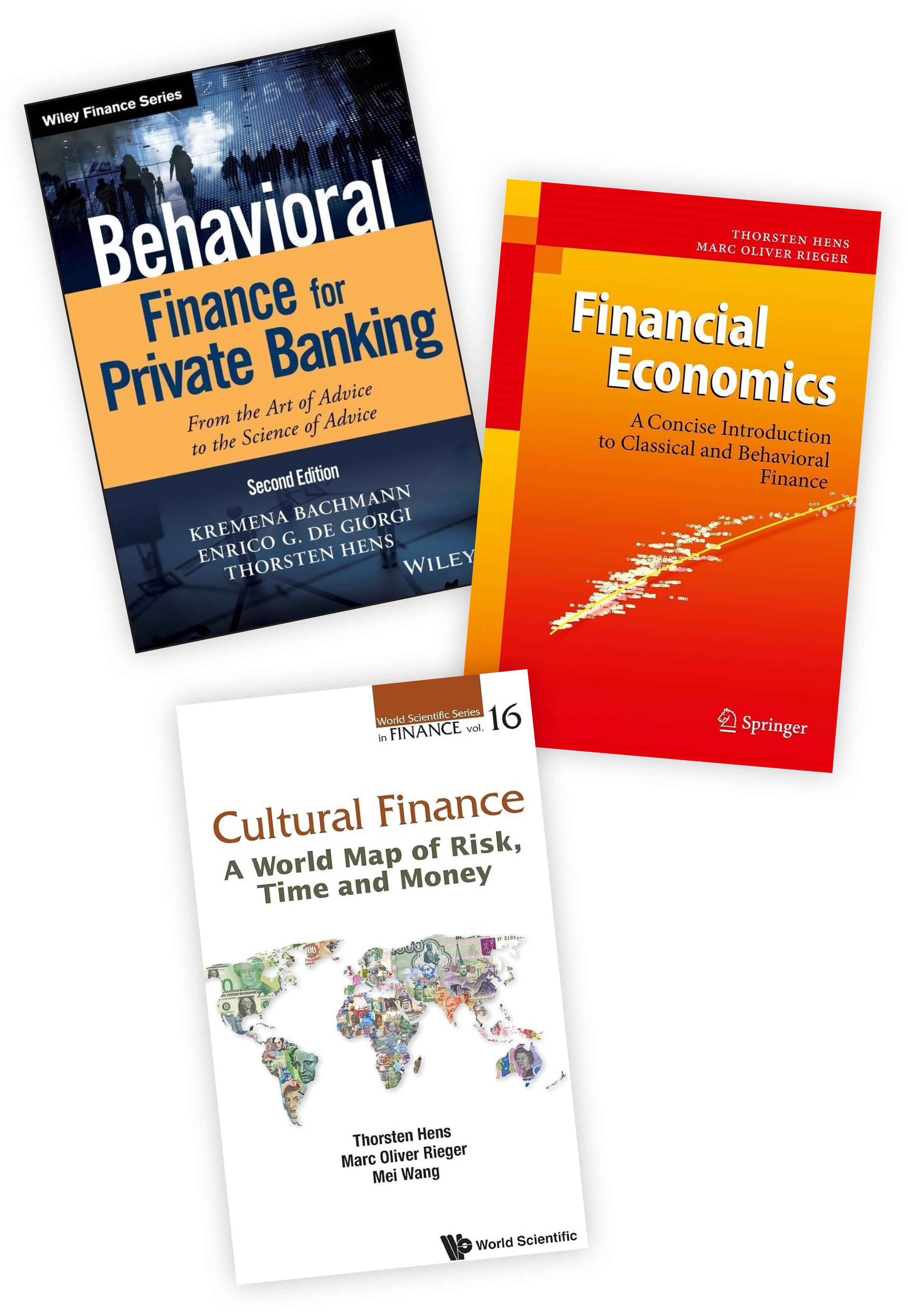
Thorsten Hens is a Professor of Financial Economics at the University of Zurich and Professor of Finance at the Norwegian School of Economics. Amongst his research interests are behavioural finance, which includes question about how psychological factors influence investment decisions. His most famous books include Behavioral Finance for Private Banking (with Kremena Bachmann and Enrico De Giorgi), Financial Economics: A Concise Introduction to Classical and Behavioral Finance (with Marc Oliver Rieger) and Cultural Finance: A World Map of Risk, Time and Money (with Marc Oliver Rieger and Mei Wang).