
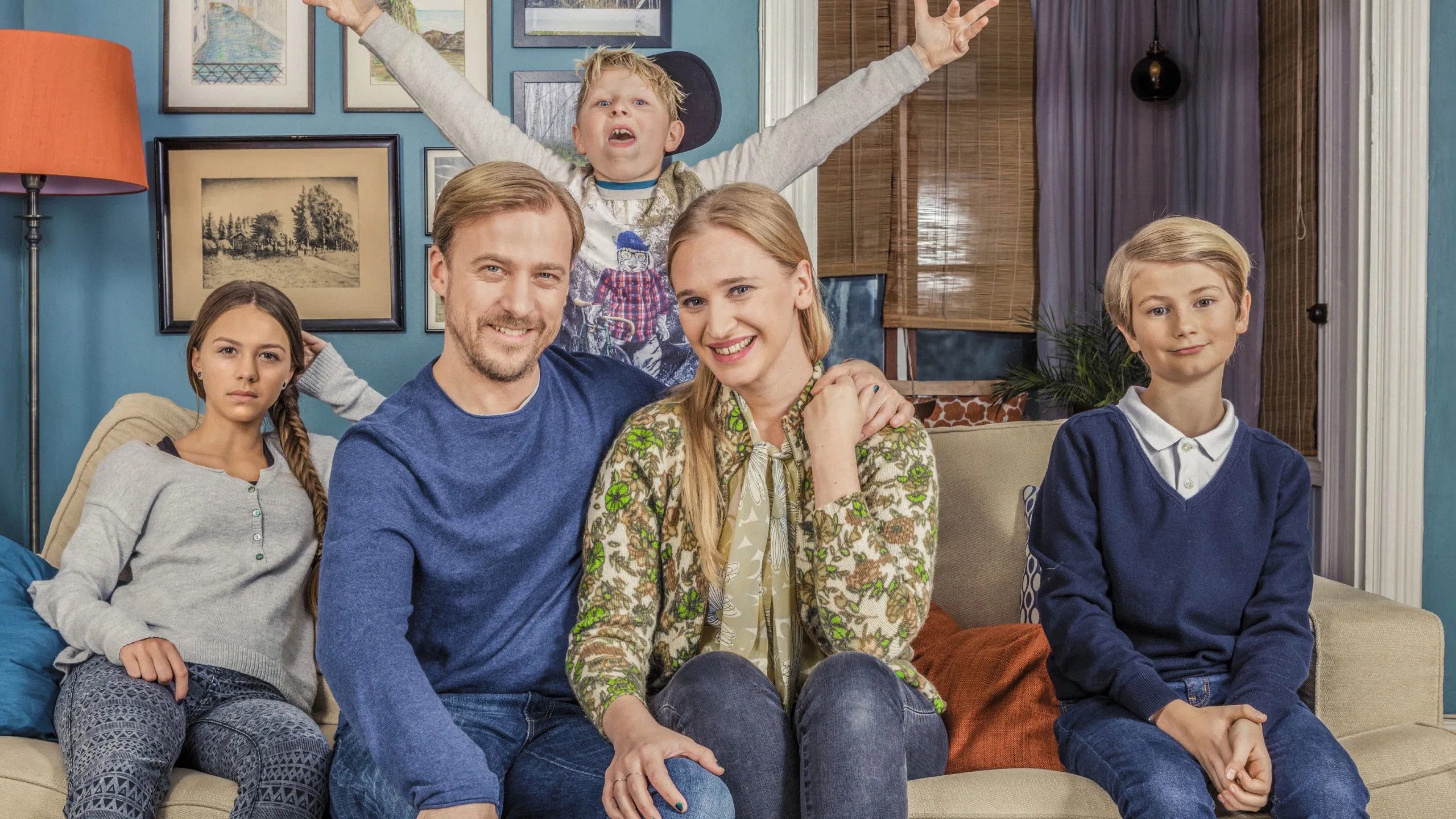
Patchwork families are widespread today, with one in ten families in Europe living with such an arrangement. But how do they deal with issues relating to responsibilities, assets and legal matters? Lawyer and author Karin von Flüe talks about how patchwork families can ensure they are secure from both a financial and legal perspective.
What is meant by a patchwork family?
These are families in which at least one parent brings a child from a previous relationship into the new family. Whether married or not, the ways in which families live together are as diverse as the patchwork that gives them their name. It becomes particularly complex when children from other relationships and joint children live together under the same roof.
Why are financial and legal issues particularly challenging for patchwork families?
On the one hand, this is because until now, the law has barely covered the issues affecting patchwork families – although this way of life has long been commonplace. On the other hand, the topic of money in relationships is generally a sensitive issue. When ex-partners and stepchildren are also involved, different interests collide – which makes it particularly challenging.
How do you get off to a good start in life together?
First of all, you need to organise your living arrangements: who is responsible for what? What are the expectations of a stepmother or stepfather? After that, it is important to clarify your finances. How will you divide the costs of bringing up children from previous relationships? What happens if one of you receives maintenance from an ex-partner? Is it fair for a partner without their own children to pay half the rent? Such questions must be discussed openly and preferably set out in writing.

What do you recommend specifically?
It may make sense to split your bank account accounts, for example in a “three-account model”. Here, each partner has their own account for personal income and expenses, plus a common household account for fixed costs. But whether it’s an account, shared funds or an Excel spreadsheet – it is crucial that there is transparency and the feeling that no one is being put at a disadvantage.
How contentious are maintenance payments from ex-partners?
Child support is intended for the child and the costs incurred in bringing them up – for example, for daycare, a share of the rent or health insurance. Tensions can arise if these payments are higher than the funds available to your common children or the children of your new partner. In practice, however, I have rarely seen during my many years of consulting that this leads to serious conflicts.
And what about debts that are brought into relationships?
In principle, the new partner is not liable for the debts of the other partner – not even if a debt is accrued when married. The situation is different if a contract is signed jointly, for example a lease. In this case, contract law applies.
What do I need to keep in mind when it comes to insurance?
You should definitely adjust your insurance policies. One typical mistake is when two people move in together and both of them continue with their previous insurance policies – meaning they pay twice. Or even worse, they both assume that the other person has taken care of everything, and suddenly they have no insurance cover. When two people move in together, they should merge their policies and, above all, check whether all the children in the household are insured? No matter whether the parents have joint custody or not – you have to check this with your insurance company.
What can have particularly serious consequences for patchwork families?
If you don’t think about a crisis – death, disability, separation, for example. Because inheritance law is usually based around traditional families with children together, there is a risk of unpleasant surprises for patchwork families.
Can you give an example of this?
Let’s say a couple have been living together for ten years. She has two children from another relationship and he has one. He dies unexpectedly – without a leaving a will. She assumes that she automatically has the right to inherit his assets, as they lived together like a married couple. In fact, however, she does not receive anything. His assets are passed on to his child. She is left behind having to pay for rent and bills, and with responsibility for three children – and with no protection under law.
What could they have done to better provide for the future?
They should have put in place a will, advance care directive or term life insurance – or ideally a combination of the three. After all, insurance is often the only way to provide financial security for your partner, especially in a common-law partnership.
Are patchwork couples who are married automatically better protected?
They are better off under the current law, but there are pitfalls here too. Take, for example, the order of succession: when someone dies, their own children are always entitled to their statutory share of the inheritance. So when a father dies, his children from his first marriage remain entitled to an inheritance – regardless of how long he was married to his new wife or whether they have children together. In my consulting work I have seen cases where adult children have forced the surviving widow to sell the house even though she lived in it. For these women, their world collapses.
How can this be avoided?
With marriage contracts and contracts of inheritance. For example, you can define a “right of usufruct”, where the surviving partner may stay in the house, with the property only passing to the children at a later date. However, this requires their agreement.
How can stepchildren be considered as heirs?
Again, this is done via a contract of inheritance. Here, too, the consent of the biological children is required. Without their consent, only the will remains, but this leaves less room for manoeuvre. Another thing to bear in mind is that in most European countries and in many Swiss cantons, inheritances passing to stepchildren are taxed significantly more than biological children.
Is adopting your stepchildren the easiest way to avoid this?
In both legal and organisational terms, yes. Adoption is often difficult from an emotional perspective – especially if the child’s other biological parent is still alive. It is usually only possible if this biological parent is dead or has hardly any contact with the child.
What additional hurdles are there for patchwork families spread across different countries?
As long as everyone lives in the same country, the living arrangement is governed by the applicable laws in that country. However, in the event of death, it can be complicated because inheritance law can vary from country to country – for example with regard to compulsory portion, inheritance rules or inheritance tax. Germany, Switzerland and France each have different requirements in this respect. This makes it all the more important to have a clear choice in your will of which law will apply. In Switzerland, for example, you can stipulate that domestic law applies – but only if this is expressly stated. Expert advice on international inheritance law is therefore essential when it comes to inheritances spanning multiple countries.
And to finish off, your most important piece of advice?
Talk to each other! No matter whether about money, pensions or if the worst should happen And get professional support. Especially in patchwork families, this is not a sign of distrust, but more of caring for your loved ones.
(Cover Credit: Bonus Family/Netflix)

Karin von Flüe
Karin von Flüe (62) is a lawyer and has been a legal advisor for over twenty years at “Beobachter”, Switzerland’s largest consumer advice magazine. She is the author of several guides, including Paare ohne Trauschein, Heiraten – was alle Paare wissen müssen and Im Todesfall. All books were published by the “Beobachter Edition” publishing house.