Our risk appetite influences many of the decisions we make in everyday life, from our choice of career, through to health and money issues. Risk researcher Ralph Hertwig explains what determines our risk appetite and why simple rules of thumb are often more helpful than complex calculations.
Mr Hertwig, some people parachute out of planes, others shy away from small changes. Are we inherently willing to take risks or are we risk averse?
Most people are rather risk averse. A willingness to take risks is the exception. Financial decision games, for example, show that about two thirds of people tend to avoid risk. However, our risk appetite can change over the course of our life.
Are there differences between women and men?
Yes. Studies show that women rate their risk appetite as being lower on average than men. There are various explanations for this. An evolutionary explanation is that a mother’s survival was particularly important for her children.
Your research shows that risk appetite is a relatively stable personality trait – similar to intelligence. Do we have a personal “risk quotient”?
This is controversial from a scientific perspective. But we were able to demonstrate there is a general risk factor that remains surprisingly stable over time. However, this is only if we ask people how they themselves rate their risk appetite. In behavioural experiments, such as with money lotteries, we do not see this factor.
What has the biggest impact on this risk quotient: genes, upbringing or experiences?
It’s hard to quantify that. Some studies estimate the genetic influence to lie between 20 and 30%. Our life history, social environment, age and even physical condition also have an impact. Those who have slept poorly may make more impulsive decisions than those who have slept well. When young people are in the company of people of the same age, this can lead to them taking greater risks.
Is it possible to take risks when skiing but invest your money extremely carefully?
Absolutely. I can ski down a mountain at full speed, but then stay away from the stock markets at the same time. This is not a contradiction as regards your general risk factor. Think of intelligence: you could be an exceptionally gifted mathematician, but then struggle more linguistically. Similarly, there are differences in risk appetite in the various areas of your life. The general risk factor acts like a “conductor” in an orchestra, with all the instruments playing different notes.
”The extent to which fear and euphoria determine our investment behaviour is often discussed – there is an interesting conversation with Thorsten Hens on the Swiss Life blog, where he discusses whether it is possible to determine whether someone invests in equities on the basis of their general risk appetite?
Only to a certain extent. Those who consider themselves to be more willing to take risks tend to invest in the stock markets. But there is not a particularly strong statistical correlation. Even a person who is willing to take risks might avoid investing in equities because they lack the experience or have faced difficult financial times in the past.
Can economic crises permanently change our risk appetite?
Yes. Economist Ulrike Malmendier has studied the effects of the Great Depression of the 1920s and 1930s. People who had experienced massive economic uncertainty as young adults were less likely to invest in equities later on in life. It would therefore be conceivable that current crises could also change our risk appetite. However, I’ve yet to see any evidence of such a long-term effect.
Young people are seen as more willing to take risks, while older people are viewed as being more cautious. What’s behind this cliché?
Quite a lot – at least in affluent Western societies. In a study on risk appetite, we examined the data from the long-term study carried out by the Sozio-oekonomisches Panel. Risk appetite remains relatively stable in early adulthood, but then decreases significantly from the age of around 60 or 65.
Why do we become more cautious in old age?
Risk appetite may decline with age as a person’s cognitive and physical abilities deteriorate. However, societal framework conditions also seem to play a role: social security systems – such as pensions and healthcare – allow us to take fewer risks. This fits in with the finding that we are not witnessing a similar decline in risk appetite in old age across many countries in the Global South. If you still have to fight to make a living in old age, you might not have the option to be more cautious. Interestingly, our risk appetite in social relationships remains relatively stable even in old age, because we need to be able to trust other people, especially when we are reliant on their support.
If our risk appetite is shaped by our personality and experience, is it even possible to change the way we approach risk?
Yes. We don’t necessarily have to change our risk appetite to make better decisions. However, we can learn how to better assess and understand risks and uncertainty. We call this approach “boosting”.
What is behind it – and how does it differ from the more well-known concept of “nudging”?
With nudging, the decision-making environment is designed in such a way that people automatically make a certain decision. You try to control their behaviour without teaching them anything. Boosting works the other way round: we teach people skills so they can make better decisions themselves. Especially in an increasingly complex world, we need older people who can take responsibility for themselves.
How does boosting work specifically?
Let’s take a common type of bike accident: a car driver opens their door without looking back, and a passing cyclist cycles into it. The Dutch have come up with a simple solution: they teach drivers to open the door with their right hand instead of their left.
How does this help?
Just try it out. If you open the driver’s door with your right hand, you need to rotate your upper body. This makes it easier to take a look backwards, where a cyclist might approach from. Instead of just warning people, they are taught a skill that they can use on an ongoing basis. It has also been shown that boosting often does not require expensive infrastructure or elaborate courses. Sometimes a simple action is all it takes to make a big difference.
So boosting helps us to act more with safety in mind. Can it also allow us to better assess risks?
Yes. Say for example that a medical treatment reduces the risk of serious illness by 50%. This sounds impressive. But what does it mean in practice? If ten out of a thousand people fall ill without treatment and only five having had the treatment, the relative risk actually falls by half. In absolute figures, however, only five out of a thousand people – or 0.5 percentage points – fall ill. Understanding the difference between absolute and relative risks and obtaining information can help you make more informed decisions.
Numbers and probabilities play a major role, especially when it comes to investing your money. How does boosting help us with financial decisions?
It is important to make a distinction between risk and uncertainty. For a risk, we know the probability of possible events, but not in the case of uncertainty. On the financial markets, we often don’t know what the future holds. Therefore, simple rules of thumb can sometimes be more helpful than complicated calculations.
Can you give an example?
Take Harry Markowitz, the economist who received the Nobel Prize in 1990 for a mathematical model that distributes wealth as cost-effectively as possible across different investments. However, when investing for his own retirement, he chose a simpler path: he distributed his money evenly amongst the available investment options. This is called the “1/N” rule.
Why didn’t he trust his own model?
These models are based on historical data. However, this data is often too limited to predict the future well. Simple rules of thumb involve making fewer assumptions. Studies show that they can perform just as well or even better than complex models under certain conditions. However, this does not mean that evenly distributing your money is always the best solution.
What can we learn from this with regard to our own financial decisions?
“Complicated” does not necessarily mean “better”. Often it’s not about avoiding risks, but about understanding them better and consciously dealing with them.
Cover: © iStock/richVintage
Portrait photos: © Arne Sattler
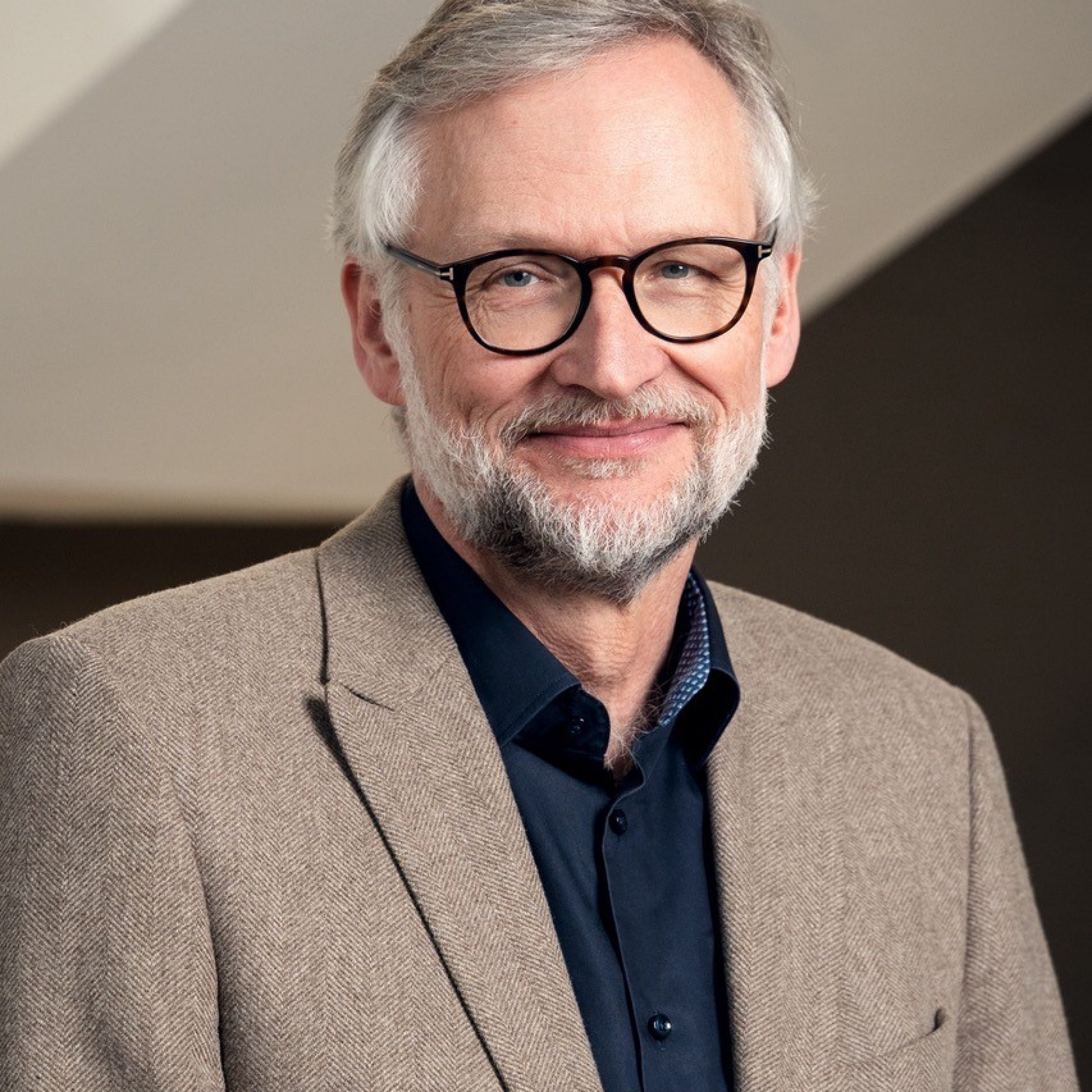
Ralph Hertwig
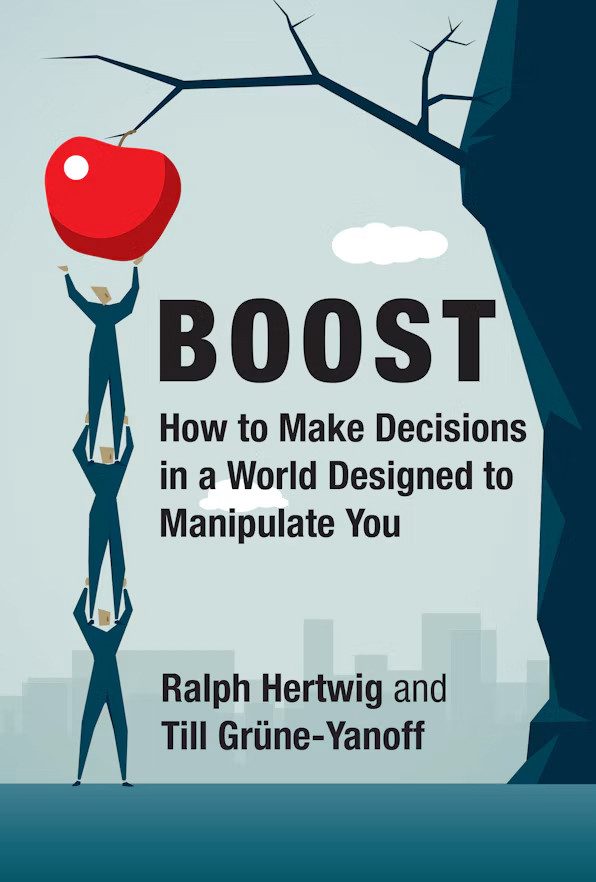
Ralph Hertwig is a psychologist and director at the Max Planck Institute for Human Development in Berlin. He looks at the question of how people deal with risks and uncertainty and how they can make better decisions. One focus of his research is the concept of “boosting”, which helps people to improve their decision-making skills and knowledge of risk. In January 2027, his book “Boost: How to Make Decisions in a World Designed to Manipulate You” (MIT Press), co-authored with Till Grüne-Yanoff, will be published.