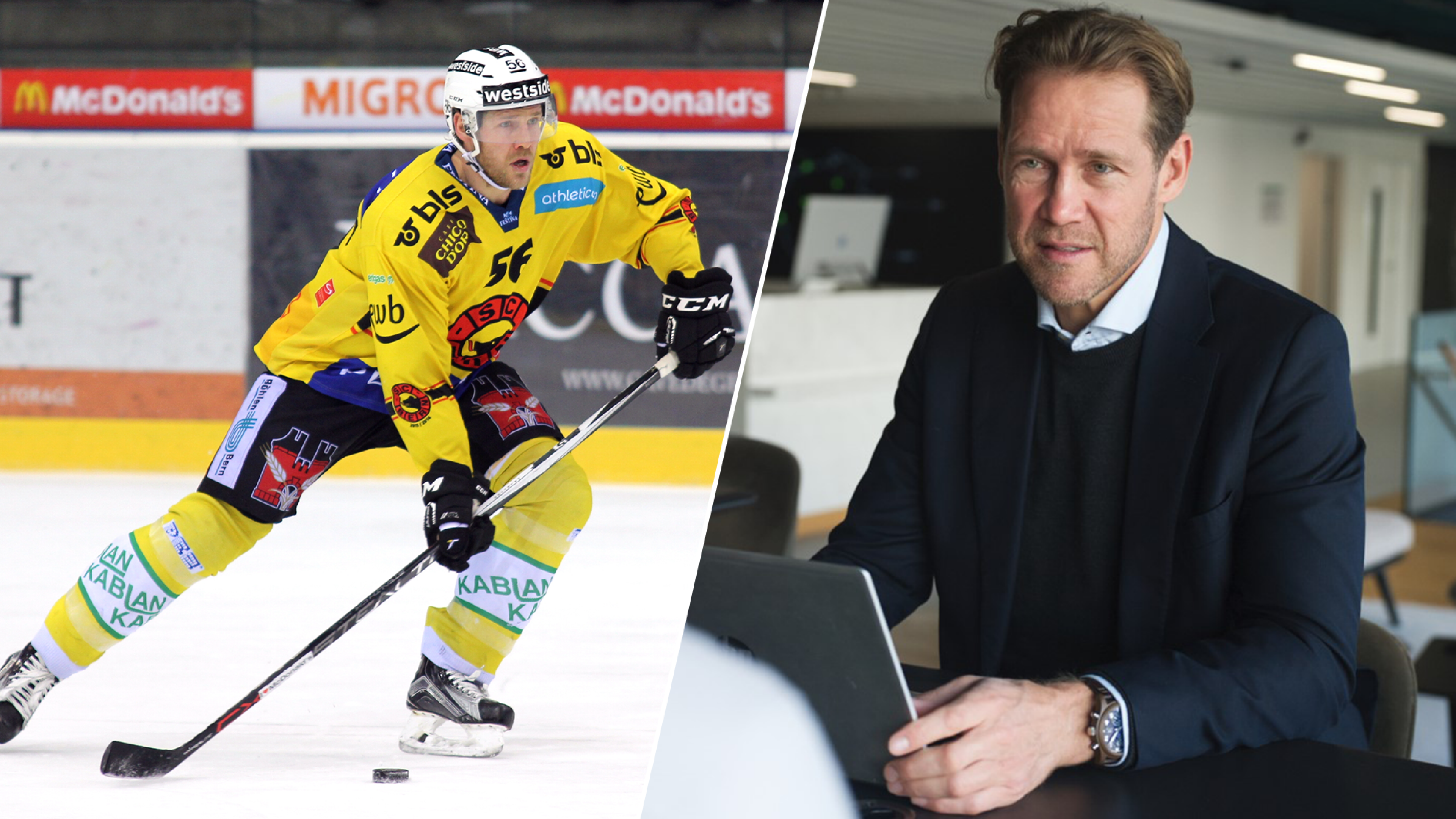
For many years he played ice hockey in Switzerland, North America and Finland – today he advises companies on takeovers and financial audits. Former Swiss ice hockey pro Timo Helbling explains how he built his second career in the world of finance and why young professional athletes should be particularly careful when it comes to money.
You wanted to become a professional ice hockey player as a teenager and you achieved your dream. When did you realise that a professional sports career wouldn’t last forever?
I was always aware of this and when I was younger, my parents made sure I attached equal importance to my passion for ice hockey and my education. I was also fortunate to be among the first intake of pupils at the Swiss Sports Gymnasium in Davos, which was the ideal preparation for my future sporting career.
Later, my ice hockey took me to North America, where playing in over 80 games and playoffs left little time for studying. After seven intense years, I returned to Switzerland and started playing for HC Lugano. At the same time, I started a bachelor’s degree in business administration.
Combining your studies and top-level sport sounds like a lot to do.
I never found studying part-time to be a burden, but rather as a balance for my sporting life. It made me a better athlete because it gave me a different perspective on sport. What’s more, you can’t train around the clock in ice hockey anyway, so I used my free time to focus on my studies.
When did you start to think about the world of work for after your career as an elite sportsman would end?
As I studied business administration and completed my master’s degree in finance and banking, it was clear to me early on that I would pursue a career in this area after I retired from ice hockey.
Who advised you on financial matters?
At first, my father was the most important person to talk about money. Later on, ice hockey agents came in: not only did they deal with my contracts with clubs and establish contact with new clubs – some of them also offered financial, insurance and tax services. With hindsight, however, I consider athletes’ reliance on their agents to be a tricky subject, as young people in particular often lack sufficient financial knowledge to form a well-founded opinion of their own.

How did you make the transition from professional sport to the private sector?
I was lucky enough to play ice hockey for many years and I continued to perform well towards the end of my career: When we won the 2016 championship with SC Bern, I was already 35. So towards the end of my ice hockey career, I had to consider whether I wanted to continue playing or whether it was time to start a new stage of my life. This was not an easy decision. However, I knew that my real goal was to move away from the “sporting bubble” and towards a new career. I was highly motivated for this as well.
Everyday life as an ice hockey player was heavily structured through training and games. As a player, many decisions are taken away from you given the training and playing routine – even your holidays are decided for you. The biggest change and challenge for me was therefore creating my own new structures. Looking back, I was only partially prepared for this transition.

What experiences from your sporting career help you today professionally?
Team sport teaches soft skills that can be really valuable in your professional career. However, they are of little use in the private sector if you don’t have the specialist knowledge required. Competition on the Zurich job market is very intense – and that’s always the case. I work with colleagues from around 70 countries, all of whom have an interesting background and are highly motivated.

How has your personal financial situation changed since your career ended?
At the start of my career, of course, I earned less than I did before as a professional ice hockey player. Nevertheless, I wanted to find an employer and a position that offered me the opportunity to develop – learning was more important to me than the salary. With hindsight I know I made the right decision. At the same time, my time spent as a professional athlete also gave me sufficient financial leeway to maintain my usual standard of living.
Which course should professional sportspeople take early on so they can lead a financially self-determined life when they are older?
Not just professional sportspeople, but all young people should start thinking about basic financial issues at an early age. As a professional sportsperson, you should also avoid making large, risky investments. In the changing rooms, you often hear about bizarre investment opportunities with unrealistic promises of returns. If you can avoid these offers, are satisfied with solid returns and understand the principle of compound interest, you will be able to set the fundamental course for your financial future.
What recommendations would you give other athletes today for the period after retirement?
It is easier to enter the job market if you have a good education, strong soft skills and a broad network. After completing my master’s degree and during the last two years of my ice hockey career, I was able to work part-time at an asset manager, which was extremely beneficial to my future professional development. My recommendation to athletes is therefore to gain practical experience in addition to their education.

Timo Helbling
Timo Helbling (1981) is a former Swiss ice hockey player. He played over 1000 games at home and abroad, including 11 games in the NHL. In 2016, he won the Swiss championship with SC Bern. Helbling holds a master’s degree in banking and finance and currently works at Deloitte in Zurich as a Senior Manager in the Mergers & Acquisitions area in the Transaction Services team.