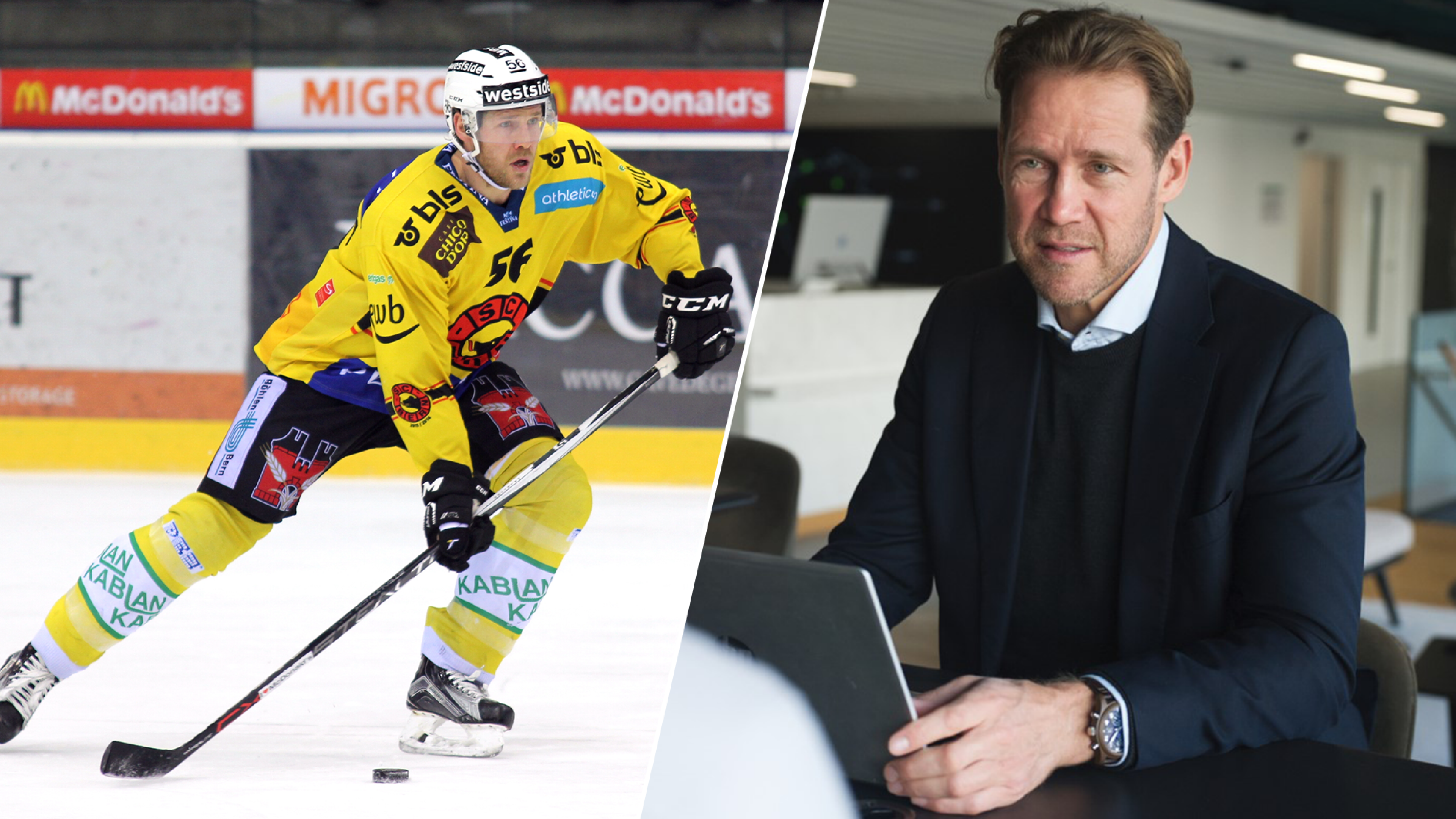

Sport and finance have more in common than you might think at first glance. In this interview, sports psychologist Alain Meyer highlights the patterns and mindsets that matter for athletes. These can also be applied effectively to investing and saving.
Alain Meyer, how do you stay calm in sports under pressure so that you can make the right decisions?
Self-management is key here. In stressful situations, you should mentally take a step back and observe what is happening. You detach from your thoughts and emotions, creating distance and a sense of calm, which allows you to consciously focus on what you need in that moment and what truly matters. We often feel stress physically: a tight chest or a tense stomach. These signals tell the brain that it needs to act. Yet in precisely those moments, it is important to calm the body in order to think clearly.
In sport, we work with breathing techniques, but also with methods such as positive self-talk, shaping your inner dialogue so that it works for you rather than against you. Improving your posture can also encourage relaxation. Simply standing up, raising your shoulders and exhaling – these are small exercises that are often underestimated. In fact, they help activate the parasympathetic nervous system, which enables us to calm down and make strategic decisions.
👉 Financial tip: This behavioural pattern is just as useful when it comes to investing or saving. In stressful situations – for example, when markets are volatile – it is crucial to keep a cool head, analyse the situation and make well-considered decisions.
In elite sport, the ability to control emotions at decisive moments in a competition is vital. When are emotions helpful, and when do they get in the way?
The key word here is acceptance. In the past, the prevailing view was that all negative emotions had to be suppressed immediately. However, recent studies show that any emotion you fight against tends to intensify. Emotions such as fear or uncertainty are not inherently negative; rather, they signal that the body needs something – for example, security or confidence. By consciously accepting your emotions, you avoid wasting energy trying to get rid of them. As a result, negative emotions lose their force. This allows you to act from a position of strength, recall your action plan more easily and focus on your skills.
👉 Financial tip: The same applies when managing your finances. Rather than being driven by negative emotions, give them space consciously. This helps you direct your energy not towards those emotions, but towards your own capabilities – or those of your advisors.

Setbacks are part of sport. What can we learn from athletes about dealing with defeat?
Many of the greatest athletes describe defeats as learning experiences. I also believe that every setback provides a learning opportunity. They force you to reflect and find solutions. Put another way: if you want a career with highlights, setbacks come as part of the package. Rather than trying to avoid them at all costs, you should accept that they are part of the journey and find a constructive way to deal with them.
It is equally important to allow space for negative emotions. After a defeat, it is perfectly natural to feel sad or disappointed. These emotions should be consciously acknowledged – within an appropriate framework. After responding in this way, people are much better able to act when it is time to perform again.
👉 Financial tip: Occasional losses are also unavoidable in finance. Price fluctuations, misjudgements or unexpected events can occur at any time. Instead of fearing these moments, you should try to learn from them for future financial decisions.
Success in sport often needs to be sustained or even surpassed. How do athletes handle the mental challenge of dealing with their own success?
In an environment where the focus is always on maximum performance, it is crucial to keep things in perspective – and that includes success. After a major sporting achievement, it is perfectly acceptable to take a break or pause for a moment rather than constantly striving for more. In professional sport, you should not define yourself solely on the basis of goal achievement. That’s why I advise athletes to remain aware that, alongside sport, they fulfil many other roles. They are also spouses, friends, parents or children. This helps create alternative perspectives and a sense of balance.
👉 Financial tip: Even when your finances are performing optimally, there is no need to keep aiming ever higher. Instead, it makes sense to pause from time to time and review your financial strategy. Maximising returns does not always have to be the primary focus.
From a sporting perspective, what matters when it comes to setting goals?
On the one hand, goals need to be realistic and measurable. You should ask yourself what is currently achievable and sensible in your everyday life. On the other hand, it is equally important to allow room for dreams, as they are the greatest source of motivation. The key is to strike the right balance between these two poles.
👉 Financial tip: As in sport, it is important to set realistic goals when saving and investing, for example as part of a well-thought-out financial plan. At the same time, more ambitious long-term goals can also be motivating. It is helpful to think in stages and map out how these can be achieved step by step.

In sport, major events and important competitions are a regular occurrence. How do you prepare for the moments that really count?
People tend to want to do more than usual in special situations. We experienced this with the Swiss national team when we reached the quarter-finals at the last UEFA Women’s European Championship. In sport, there is the concept of the optimal performance zone: peak performance is most likely when you are operating at a moderate level of stimulation. Before an important match, players are usually already more nervous than usual. In such cases, it can be counterproductive to push them beyond that optimal midpoint with even more intense preparation. Usually, the best approach is not to change anything at all. That said, a certain level of tension is essential to maintain focus.
👉 Financial tip: Major financial decisions can also be emotionally demanding. Rather than putting extra pressure on yourself, it is important to remain calm and rely on your own capabilities – or those of professionals. This increases the likelihood of making the right decisions.
Discipline and perseverance are key factors in achieving sporting goals. From a sports psychology perspective, how important is training?
Very important. Scientific evidence clearly shows that regular repetition is a key driver of success. When we repeat a pattern often enough, the likelihood of being able to access it in decisive moments increases. In this sense, we are constantly training almost everything: if we are frequently anxious, we are unknowingly conditioning ourselves to respond with fear in certain situations. Conversely, if we repeatedly tell ourselves that something is achievable and that we will find a solution, we naturally adopt a more positive mindset.
👉 Financial tip: Training – in the sense of preparation and acquiring knowledge – is just as essential in finance. Whether you’re interested in saving or investing, building the right expertise or seeking professional advice is key to a successful financial plan.

Alain Meyer
Alain Meyer is a former professional footballer. After retiring from his playing career, he completed a degree in sports psychology and founded his own consulting firm. Alongside working with numerous elite athletes, he supports the Swiss women’s national team and FC St. Gallen. In addition, he offers coaching services for companies and private individuals.